
Your Custom Text Here
Three pillars of Design
For the project development, I would like to include three fundamental pillars of design to cultivate a collaborative solution that involves the local community. These three pillars are:
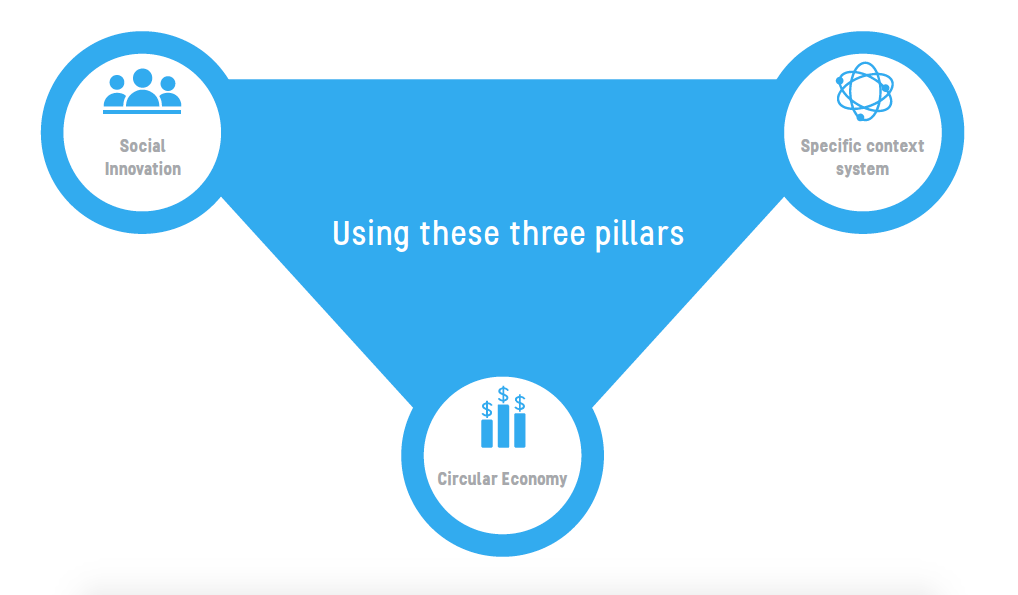
SOCIAL INNOVATION
“Social innovation is the process of developing and deploying effective solutions to challenging and often systemic social and environmental issues in support of social progress. Social innovation is not the prerogative or privilege of any organizational form or legal structure. Solutions often require the active collaboration of constituents across government, business, and the nonprofit world.”
Social innovation try to address social challenges that are complex in nature. In this issue it is worth highlighting the book "The Social Labs Revolution" Zaid Hassan, a co-founder of Reos Partners, makes the case that taking a planning-based approach to risk almost certain failure. Instead I have expounds on an experimental, prototyping based approach, social labs, that have proven more effective in addressing complex challenges
SPECIFIC CONTEXT SYSTEM
It may seem obvious that working with indigenous communities needs to include local solutions is, but many solutions that have been tried to implement different kind of solutions in the past, have failed, due to the lack of research and development of a work scheme with a high content of human centered design.
“Design for localism - local is a quality, not a place marker”
There is a strong relationship when one is leading a social project among the community, the local experiences and knowledge and the search to exalt the roots that the locals have. The search for solutions in relation to the drinking water access of the Wayuu community is determined by a general questioning of how these communities can be empowered to find their own solutions and carry on with them without the need of facilitators there?
CIRCULAR ECONOMY
Linear economy does not take into account the whole life cycle of the product, and maybe just because you did not have to worry about this, the massive production took over the system.
Talking about a Cyclical economy makes necessary to put in the table the Circular economy which in the Ellen Macarthur Foundation website is explained as:
“A circular economy is restorative and regenerative by design, and aims to keep products, components, and materials at their highest utility and value at all times. The concept distinguishes between technical and biological cycles. As envisioned by the originators, to circulate is a continuous positive development cycle that preserves and enhance natural capital, optimizes resource yields, and minimizes system risks by managing finite stocks and renewable flows. It works effectively at every scale.”
LET ME INTRODUCE YOU TO LA GUAJIRA
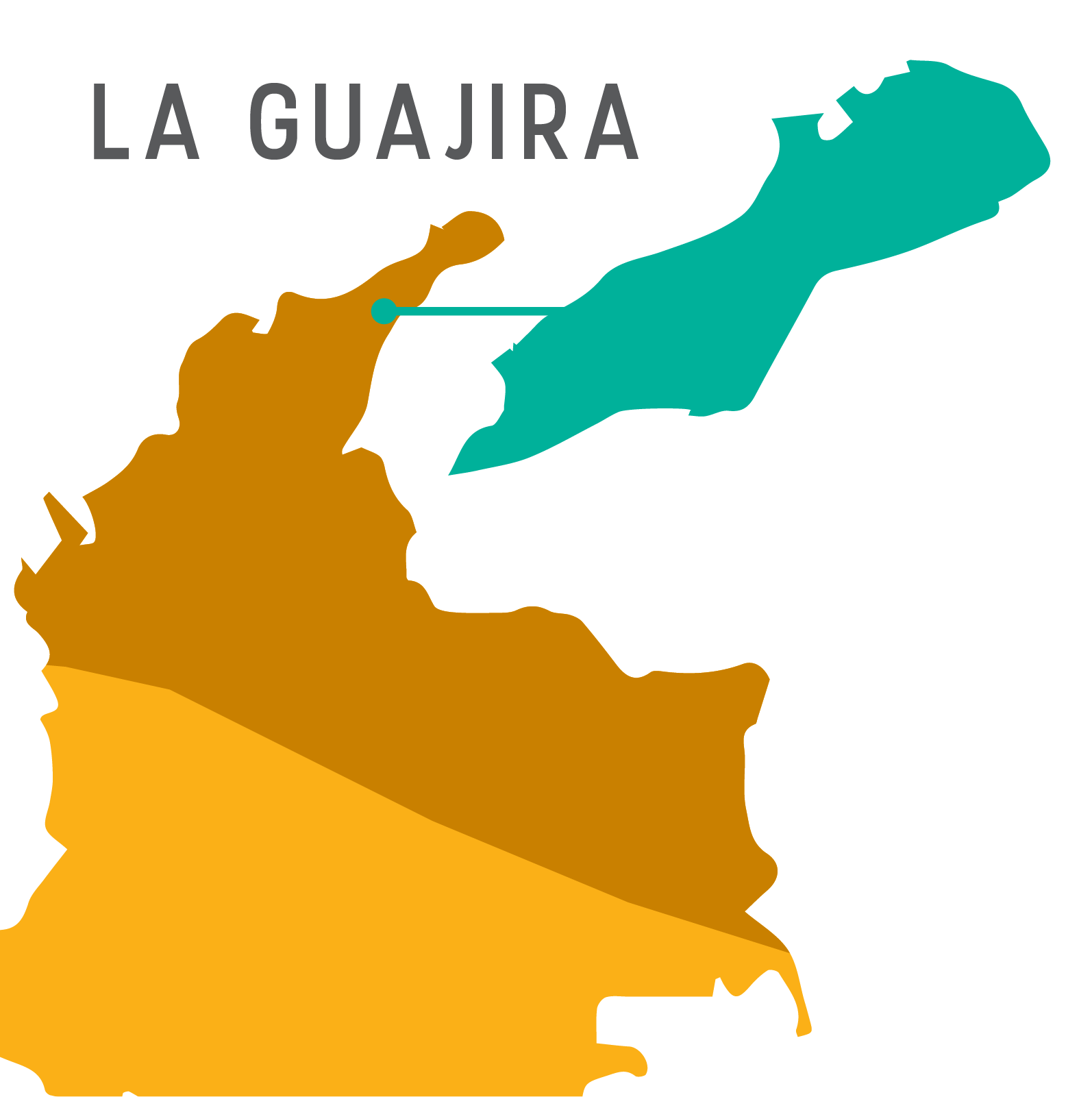
Guajira!
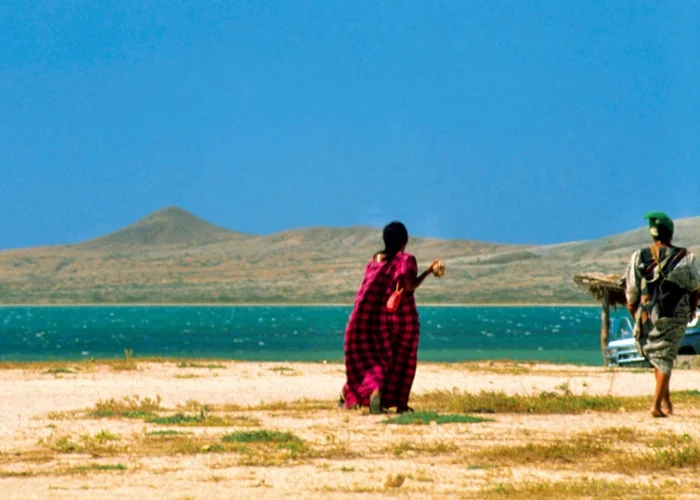
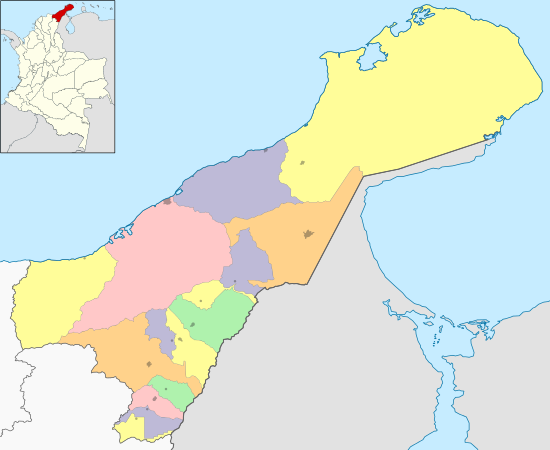
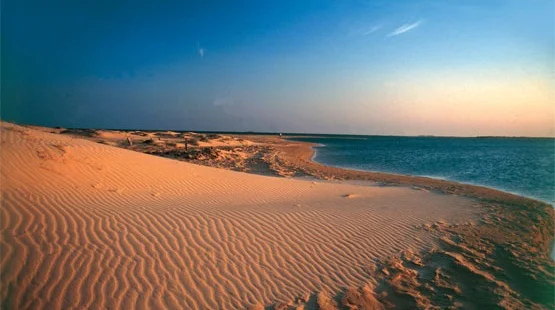
A department in Colombia. It is located in the northeast region of the country, on the Caribbean Sea and bordering Venezuela. It is divided in three sub regions: Upper, Middle and Southern Guajira. Most of the area is arid. The weather varies between 89 – 93 Fahrenheit.
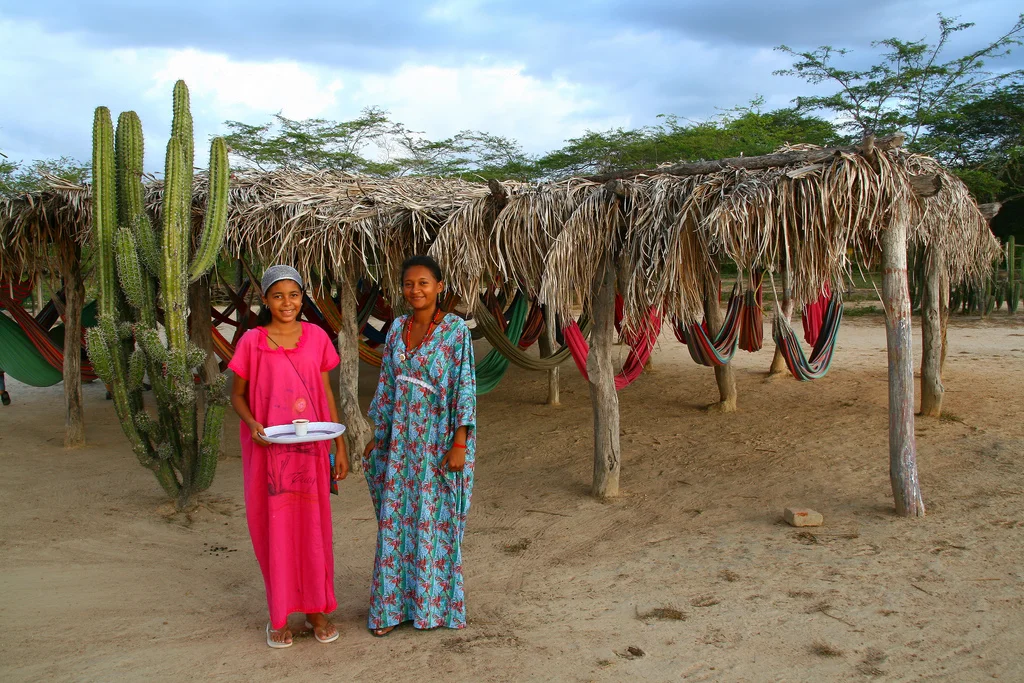
It is the home of the Wayuu indigenous tribes. The municipalities with the largest indigenous populations are: Uribia, Manaure and Maicao.
Los Wayuu are an indigenous community that inhabit this region. To this day they are the biggest indigenous group in the Colombian territory. There are approximately 100.000 living in la Guajira, and some others live either in the border between Colombia and Venezuela, or Venezuela itself. The majority of Wayuus that live in la Guajira are located in Uribia, a city which calls itself as the Indigenous capital.
Each small group of Wayuus has a handful of houses that are made of cane and adobe, a construction that could be considered to some extent suitable for a desert zone like this one.
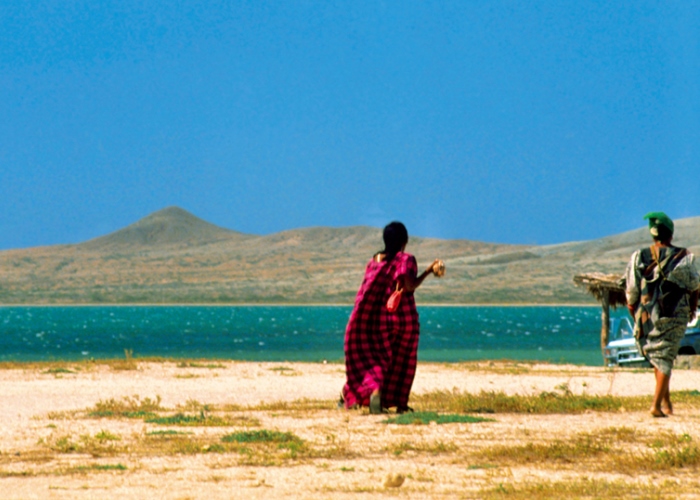
Due to the climate change and the global warming they are facing hard conditions to live. They are going under a severe drought. They have serious problems within the context, from extreme heat to dehydration and no water apart from the salted sea water. It is clear the region’s chronic water shortage.
To show you how critical the situation is, I will share with you a small part of what Stephen Hide experienced while he was eating a goat stew. He is an author posting in The City Paper Bogota – a news website for English speakers.
“When I ask to wash my hands, the restaurant owner offers me a bowl of water that turns out to be the dish-washing bowl. As I plunge my hands in among greasy plates, I ponder how this exchange of bacteria will work, and in whose favour.
The Wayúu’s water crisis is as much about quality as quantity. Not only is there not enough water, but what water there is often gets polluted, causing diarrhea and malnutrition. This, combined with poor hygiene, has triggered a health crisis which has killed thousands of Wayúu in recent years.
”
La Guajira is facing a humanitarian crisis. Last year 108 children died because of malnourishment and lack of drinkable water.
Collaborative and inclusive design with La Guajira community
How design is changing and designers are to be considered the future shapers of our environments?
Due to climate change and other diverse factors about the current environmental status of our planet, we can see how now new initiatives that are more sustainable and responsible are becoming stronger, how economy is changing and one of the matters most important for me: How the role of designers is changing going towards a more holistic way to intervene a context or the give solution to a problematic situation.
I am a current candidate for an MA in Design for Sustainability and my background is Industrial Design. Some might think that these two areas are at some point contradictory, but I find people who consider this to be true have an argument which lays in the old school way to teach industrial design and how the Industrial Designers have intervened the professional field before.
What I learn from my studies in Industrial Design is all about concepts, shape, materials, efficiency, production, production and production. Yes! Back in college my teachers used to give a lot if importance to how we could design a product that could be easily scale and be integrated to a mass production chain while sustainability, well... We all have our own thoughts about what sustainability means, but it can be stated clearly that it doesn’t go along with mass production and a lot of what the industrial revolution left us behind.
Consumption is a transcendental issue of our society, we now have a undeniable overconsumption which is no longer sustainable for human kind. So designers we can no longer discard in the design process the responsibility we have when we design something, we need to make a switch in our system thinking, and start to see what is happening with our products – The full life cycle –
The overconsumption, unconsciousness and overpopulation has lead our planet to be in overshoot: Climate change, natural disasters, social inequity and so on. Our house, everyone’s house is screaming for a change.
Sometimes you can pretend nothing is happening, but sometimes it is inevitable to get touch but some communities that are suffering unimaginable things for people like me and others that live in the cities with at least access to the very basic needs of humans as it is clean water and food.
Where I am from, Colombia, there is a region in the northern part that is under a humanitarian crisis, they do not have access to drinkable water and people are malnourished as well. This situation should not be happening anymore and that is why I as a Sustainability student, I will be researching for solutions that can improve their current situation.
Every week I will be telling you how I am advancing in my research, context, about the community there, some of the amazing knowledge and tools I have learned so far in my master’s studies, and many other things. I hope you can join me in this amazing journey of being a sustainable advocate and designer.